
Learner-Centered Design
Empathy for PowerPoint

Situation
After observing multiple training deliveries, I noticed that existing training presentations were trainer-focused. The driving force behind slide design was trainer-prompt – it did not take learner experience into account. The company does not have a budget for professional graphic designers, so trainers need to enhance their skills to design more effective presentations. PowerPoint is the main tool.
Task
Foster empathy for the software. Design, develop, and deliver a 1-hour session on learn-centered PowerPoint design.

Design principles to enhance presentation impact
Action
The presentation followed the Learn/Do model of teaching. Since the goal was to encourage learner-centered design in PowerPoint, I developed a deck that served both as the presentation and as an example of theory application. The deck included detailed notes so it could be used and referenced in the future. At the end of the session, I posed an optional challenge to redesign an existing deck.

Result
Trainers immediately began implementing their new skills. The department saw an uptick in compliments from trainees regarding presentations. This presentation as a whole was repurposed as part of a leadership development program and used to teach the larger company how to communicate effectively using PowerPoint.
-

Responsibilities
Instructional design, research, content selection, slide design, facilitation
-

Audience
Company Trainers
-

Development Tools
PowerPoint, Zoom (for delivery)

These images represent the balance principle of design. This image shows a standard slide design.
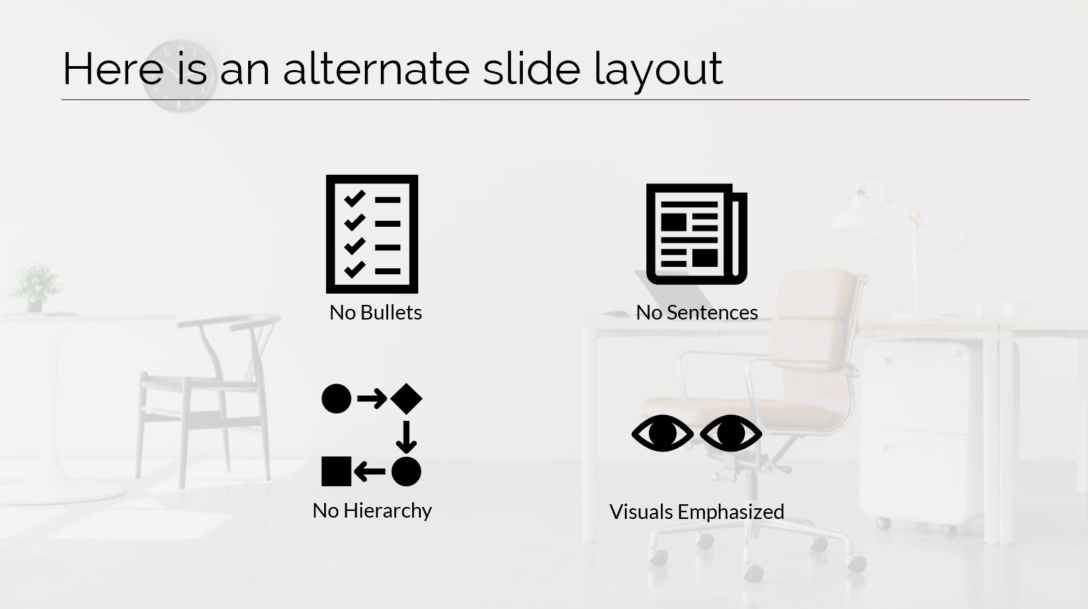
This one demonstrates how shifting the presentation can enhance learner retention.
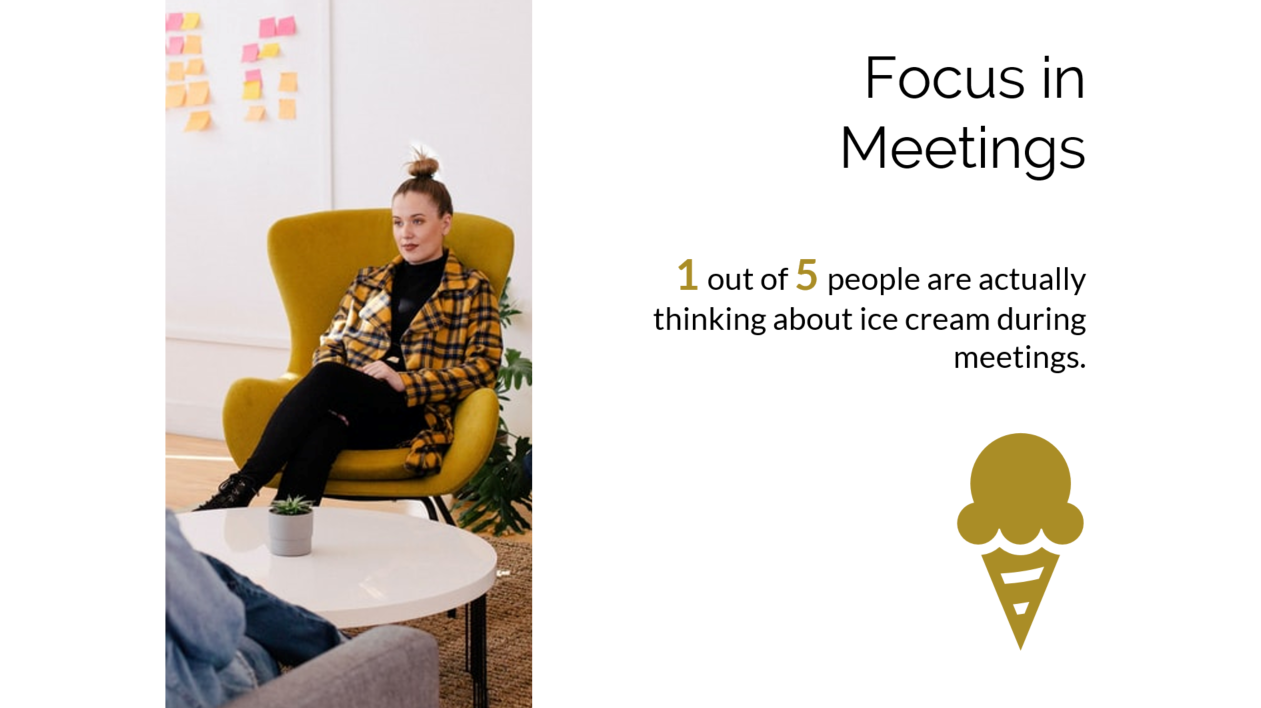
The images below represent progressions of the emphasis principle


Design Rationale
I believe in having intention for every design decision. This section explains why I made the choices I did and the science behind those decisions.
-
This course taught the basics of cognitive load by taking great care to incorporate Theory principles into the design and development. The lesson relied primarily on instructor verbal explanation which was accompanied by strategically designed visuals to help promote retention. This pulls from the concept of minimizing extraneous cognitive load by implementing the dual-channel principle of Multimedia Theory (there are two channels for processing verbal and pictorial information).
-
This course pulled heavily from Knowles’ principles of adult learning, specifically; adults are most interested in learning what has immediate relevance and adult learning should be problem-centered.
The target audience for this group was training facilitators who regularly make and update their own PowerPoint slides. As such, real-world examples were used, and the PowerPoint tips included could be immediately applied to existing work. They could even repurpose some slides to include in their own work.